
Keynotes
The Research Object Odyssey:a journey of technology, community and politics
Sep. 30, 9.30
Session Chair: Sandro Fiore
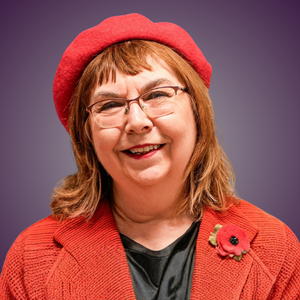 Carole Goble
University of Manchester, UK
From 2013 [1] we have pioneered and promoted the idea of a “Research Object” as a unit of Knowledge Exchange for research. We envisioned a web of objects described and linked by metadata, each object itself a compendium of all the elements of a research investigation; the data, protocols, workflows, and tools associated with a narrative publication. 13 years later the RO-Crate [2] is the leading form of “Webby” FAIR Digital Object; a metadata middleware framework. Its use ranges from the platform-agnostic prosaic (move an object’s metadata from one service to another, archive data, record process provenance for reproducibility) to publishing profundity (living papers, research released and dynamically updated). FAIR (Findable, Accessible, Interoperable, Reusable) certainly gave RO-Crates a boost as a mechanism for carrying actionable metadata with research entities on their journeys through the service ecosystems of science. Was taking Research Objects from idea to implementation and adoption straightforward? Of course not. Technical rabbit holes and political twists and turns, challenges in building and evolving a community and its processes and practices, user-developer misunderstandings, and the opportunities of AI all feature in our tale. I will present the why and wherefore of Research Objects and RO-Crates but more importantly our odyssey, and its lessons as a form of “Translational Computer Science” [3]. What is more, the IEEE eScience conference has had a pivotal role in our quest and success.
[1] Sean Bechhofer, et al (2013) Why Linked Data is Not Enough for Scientists FGCS 29(2) 599-611 https://doi.org/10.1016/j.future.2011.08.004
[2] Soiland-Reyes S et al (2022) Packaging Research Artefacts with RO-Crate. Data Science, 5(2):97-138, https://doi.org/10.3233/DS-210053
[3] Abramson D, Parashar M, Arzberger P (2021) Translation computer science – Overview of the special issue, Computational Science, 52, https://doi.org/10.1016/j.jocs.2020.101227.
Carole Goble CBE FREng is a Professor of Computer Science at the University of Manchester, UK. She is a leader in Digital Research Infrastructures, translating technical innovations in distributed computing, semantic and metadata technologies, data and software sharing and computational workflows into FAIR and Open information solutions for scientists, in particular the Life Sciences and Biodiversity. She is currently:Joint Head of Node of ELIXIR-UK the national node of ELIXIR, the European Research Infrastructure for Life Science Data; and the lead of the BioFAIR Method Commons national infrastructure for life science FAIR computational workflows. She previously co-led of the Federated Analytics programme for Health Data Research UK and is a founder of the UK’s Software Sustainability Institute. Carole is an author of the seminal FAIR principles for scientific data and recipient of the Microsoft Jim Gray award for her contributions to eScience. She has keynoted twice already at IEEE eScience (2005, 2012), so this makes a hattrick. [web]
Data Science and Analytics for the Next Era of Distributed eScience
Sep. 30, 14.00
Session Chair: Marco Lapegna
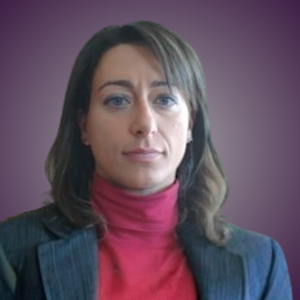 Maria Fazio
University of Messina, Italy
The next era of eScience involves innovative and sophisticated AI-based analysis tools operating in highly distributed environments. As research workflows become fragmented across edge, cloud, and HPC infrastructures, scientists need to gather research data across federated systems and information about their connections. Therefore, Knowledge Graphs and new approaches for representing and enriching data can greatly impact the quality of research paths by providing the structural foundation necessary for an AI-native research lifecycle. Representing eScience entities as high-dimensional items in heterogeneous graph structures, we can leverage autonomous reasoning to interpret vast, interconnected datasets that traditional models fail to capture. Exploring how these approaches transform distributed infrastructure into analytical engines capable of (near)real-time reasoning and predictive modelling could change the way we plan research workflows and assess scientific processes. Notably, these strategies create opportunities for the automation of complex reasoning and the identification of latent patterns, evolving scientific processes into dynamic knowledge services.
Maria Fazio is Associate Professor in Computer Science. She is a member of the Editorial Review Board of several international journals, coordinator of the e-Health Continuum Research Lab and a senior member of the Future Computing Research Lab at the University of Messina. She is currently the Coordinator of the Master’s course in Data Science at the University of Messina. She is co-founder of Alma Digit, which is an SME and academic Spin-Off at the University of Messina aimed at process automation in the Cloud. Her research interests are focused on Compute Continuum, with particular reference to intelligent microservice orchestration, Agentic AI deployments, security in IoT-Edge ecosystems. [web]
Backpacks and Black Boxes:Reproducible Science When AI Writes the Code
Oct. 1, 9.30
Session Chair: Raffaele Montella
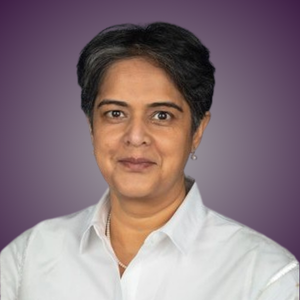 Tanu Malik
University of Missouri, USA
Computational science has a portability problem that predates AI:a workflow that runs flawlessly on one facility routinely fails on another, because the code alone never captures the full truth of what it needs. The Floability project addresses this by packing a scientific notebook into a self-describing backpack that carries its complete software, data, and cluster-resource context, so a workflow discovered on a laptop can be deployed, unchanged, across heterogeneous HPC cyberinfrastructure. Artificial intelligence now sharpens this challenge in an unexpected direction. As coding agents increasingly author the scientific code we run, they introduce a new and measurable failure mode:the environment specification gap. This keynote argues that reproducibility and AI are now inseparable. The same gap between “it ran” and “it reproduces” appears whether code is written by a person or a model, and the path forward is infrastructure that captures complete environment context by construction — rather than trusting any author, human or AI, to get it right. I trace this arc from Floability’s backpacks to the specification gap, and outline what reproducible eScience must demand of the AI systems now embedded in the scientific process.
Tanu Malik is an Associate Professor in the Department of Electrical Engineering and Computer Science at the University of Missouri, where she leads the RADIANT Lab. Her work has long centered on making computational science reproducible — helping pioneer lightweight software packaging and advancing Sciunit as a practical path to portable, reproducible workflows. Her research spans trustworthy systems, scientific computing, and distributed and parallel systems, with solutions that have supported astronomers, geoscientists, high-energy physicists, and most recently material scientists. The RADIANT Lab is funded by the NSF, NASA, Army Research Lab, the Department of Energy, and industry funding. Malik holds an NSF CAREER Award and a DOE Better Scientific Software Fellowship. Before joining Mizzou in 2025, she was an Associate Professor at DePaul University and a research scientist at the University of Chicago and Argonne National Laboratory. She earned her PhD from Johns Hopkins University. She is a member of the ACM and IEEE. [web]
Distribute and Learn 1 Billion in Europe
Oct. 1, 14.00
Session Chair: Beniamino Di Martino
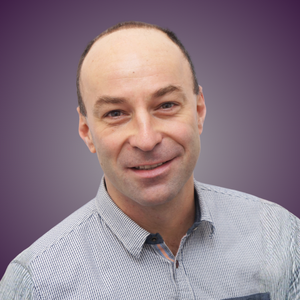 Radu Prodan
Universität Innsbruck, Austria
The digital world hosts approximately 6 billion Internet users, representing about three-quarters of the global population, with over 8.5 billion mobile edge device subscriptions as the primary access method. Bringing nearly everyone online generates over 400 billion gigabytes of data daily, overwhelming the processing and storage capacity of modern supercomputers with millions of processing cores and operating at over 1 billion gigaflops per second. The emergence of GPU accelerators triggered the modern AI boom, enabling deep neural networks with billions of neurons and parameters to outperform humans in specific, supervised, structured tasks, such as internet search, image recognition, or speech detection. Today, federations of edge devices like IoT industrial sensors, smart cameras, networking routers, switches, gateways, wireless access points, and consumer retail devices like smartphones, laptops, and healthcare equipment equipped with powerful neural processing units exhibit peak performance up to trillions of operations per second for specialized AI inference, comparable to that of parallel computers 20 years ago. The presentation provides an outlook on the research activities of the endowed professorship in Edge AI at the University of Innsbruck, focusing on learning from large numbers of distributed, interconnected, memory-constrained devices. The research addresses real industrial needs of 11 local funding companies and three large multimillion-Euro Horizon Europe projects:Graph-Massivizer using sampling for compressing graph-structured data with billions of nodes and trillions of edges for training and inference in graph neural networks, DataPACT addressing AI compliance according to the EU regulations using federated knowledge distillation, and CoAgent, researching AI pipelines and distributed small language models for reasoning.
Radu Prodan holds an endowed professorship in Edge AI at the Department of Computer Science, University of Innsbruck, Austria, co-funded by the Austrian Research Promotion Agency (FFG), the State of Tyrol, the Tyrol Economic Chamber, the Federation of Austrian Industries, and 11 local companies. Between 2018 and 2025, he held a professorship in distributed systems at the University of Klagenfurt. He received his PhD in 2004 from the Vienna University of Technology and his tenure in 2018 from the University of Innsbruck. His research interests include AI methods and tools for performance, optimization, and resource management in distributed and parallel systems. He participated in numerous national and international projects and coordinated three European projects, securing over €7.5 million in funding. He authored over 300 publications and received three IEEE Best Paper Awards. [web]
A Journey Through the European HPC Infrastructure for Nuclear Fusion Energy Research
Oct. 2, 9.30
Session Chair: Raffaele Montella
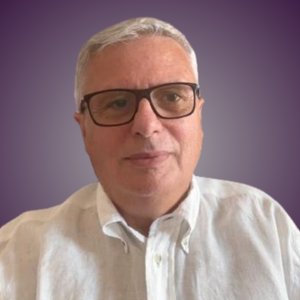 Francesco Iannone
ENEA, Italy
Since 2009, the European fusion research community has relied on dedicated High-Performance Computing (HPC) infrastructures specifically designed to support large-scale numerical simulations of magnetically confined plasmas. This long-standing strategy has evolved through successive generations of computing facilities, initially hosted at the Jülich Supercomputing Centre (JSC), later extended to the Broader Approach facility in Rokkasho, Japan, and more recently consolidated with the ENEA-CINECA collaboration, following a continuous growth in computational capability and system complexity. This progressive evolution has enabled increasingly detailed and physics-rich simulations, supporting the scientific challenges associated with the design and operation of present and future fusion reactors. A distinctive feature of these procurement processes has been the adoption of a co-design methodology, where HPC system architects, technology providers, and plasma physicists have closely collaborated to ensure that the resulting infrastructures effectively meet the computational requirements of the most demanding fusion simulation codes. This approach has allowed key plasma physics applications to exploit emerging hardware technologies efficiently while maintaining scientific accuracy and scalability at extreme scale. The availability of CINECA’s state-of-the-art HPC ecosystem has also provided the fusion community with access to heterogeneous GPU-accelerated architectures. As a consequence, significant efforts have been devoted to refactoring legacy plasma simulation codes, many of which consist of hundreds of thousands of lines of source code developed over several decades. These activities aim to expose sufficient parallelism and improve memory locality, allowing applications to scale efficiently on modern accelerator-based systems. However, the complexity, cost, and long development time required for porting mature scientific software suggest that this approach may not always be sustainable. An alternative and complementary strategy is represented by surrogate simulation techniques based on Artificial Intelligence. By leveraging the vast amount of data generated over years of high-fidelity plasma simulations, machine learning models can be trained to approximate the behaviour of computationally expensive numerical solvers. Such surrogate models have the potential to execute efficiently on heterogeneous HPC architectures while dramatically reducing time-to-solution. This emerging paradigm may complement traditional numerical modeling, enabling faster design iterations, real-time analysis, uncertainty quantification, and integrated workflows for future fusion reactor research.
Francesco Iannone is a physicist at ENEA (the Italian National Agency for New Technologies, Energy and Sustainable Economic Development). After participating for more than ten years in large tokamak experiments in the field of magnetic confinement nuclear fusion, since 2007, he has been actively involved in the design, deployment, and operation of High-Performance Computing (HPC) infrastructures supporting the European fusion research programme. His work focuses on the procurement and management of large-scale HPC systems, co-design activities between computational scientists and technology providers, and the optimisation of scientific applications for advanced computing architectures. He has contributed to the evolution of the European HPC infrastructure dedicated to fusion energy research, supporting the execution of large-scale plasma physics simulations for the study and development of magnetic confinement nuclear fusion reactors. His research interests include heterogeneous computing architectures, GPU acceleration of scientific applications, HPC system architecture and resource management. He has participated in several European projects related to HPC and nuclear fusion energy and has contributed to the development of advanced computational infrastructures serving the European nuclear fusion community. [web]